At Dorri’s Dental, we focus on personalized, patient-centered dental care. Our skilled dentist, Dr. Khalid, provides tailored treatments using advanced technology in a comfortable setting. Visit us for a comprehensive, customized dental experience.
Severe tooth pain, swelling, or sensitivity? You may need a root canal. At Dorri’s Dental in Boynton Beach, FL, we provide gentle, effective root canal therapy to save your natural tooth and relieve pain.
Our modern techniques make root canals quick, painless, and stress-free, helping you restore your oral health without fear.
A root canal saves a tooth that would otherwise need to be extracted, preserving your natural smile.
The procedure eliminates the source of infection and pain, providing significant relief from discomfort.
By removing the infected pulp and sealing the tooth, a root canal prevents the spread of infection to surrounding teeth and gums.
Root canals restore damaged teeth to their original condition, allowing for normal function and appearance.
A root canal is a restorative treatment that removes infected or damaged pulp from inside a tooth, preventing further decay or extraction.
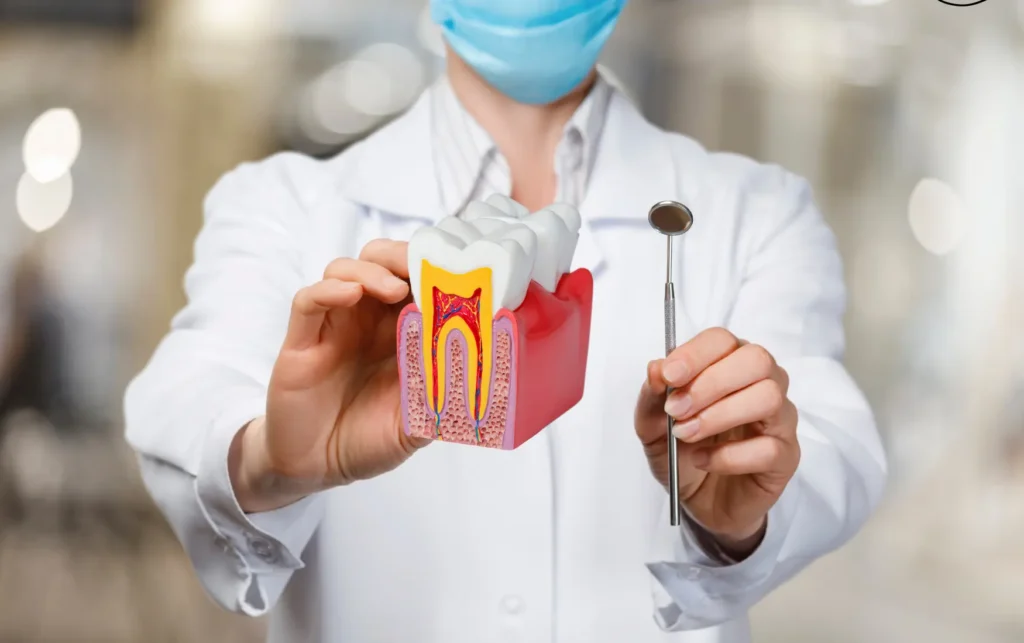
A tooth needs root canal treatment when the pulp, the soft tissue of nerves and blood vessels inside the tooth, becomes infected or inflamed. That usually happens after deep decay, a crack, repeated dental work on the same tooth, or an injury. The signs to watch for:
If you are in the Boynton Beach area and any of this sounds familiar, call our office at (561) 244-5001. Catching it early usually means a simpler visit.
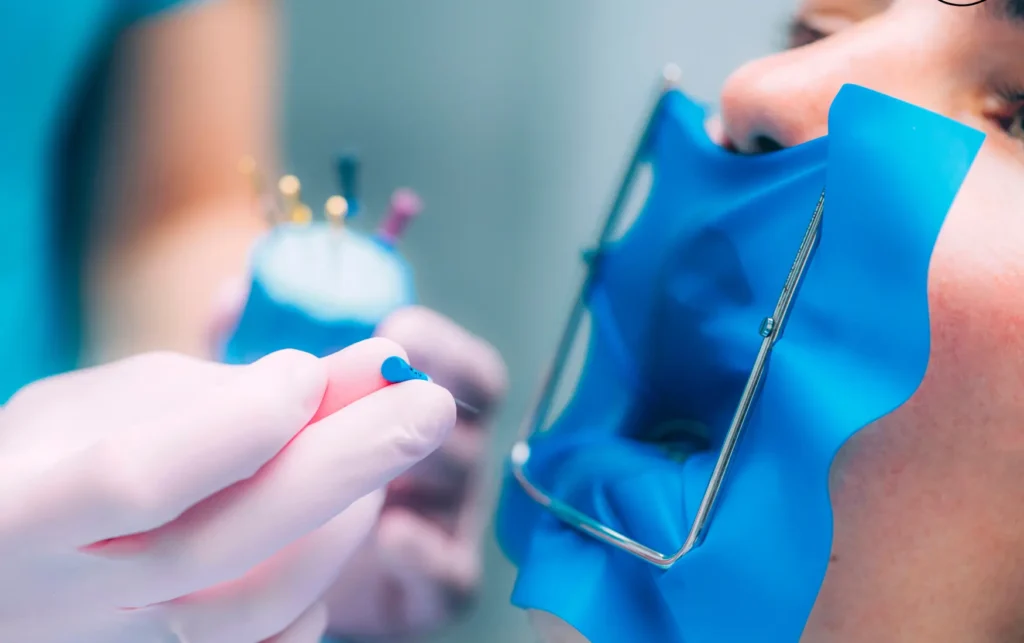
Most of what people fear about root canals comes from how they were done decades ago. Modern anesthetic and 3D imaging have changed the experience considerably, and for most patients it feels a lot like having a deep filling placed. We start with X-rays, and where the anatomy looks complicated we also use our cone beam CT scanner, since a molar can hide a canal a flat image will not show. We then numb the tooth fully, with nitrous oxide available if anxiety is a factor. Once you are numb we open the tooth, remove the infected pulp, clean and shape each canal, then fill and seal them so bacteria cannot get back in. Straightforward cases are often done in one visit; molars sometimes need two, and we will tell you which before we start. Back teeth almost always need a crown afterward, covered below.
A root canal removes the tooth’s blood supply, which over time makes the remaining structure more brittle. For molars and premolars, a crown is what keeps that tooth from fracturing later. A root canal without the crown that should follow it is an unfinished job.
Many patients have the root canal done by a specialist and are then referred somewhere else for the crown. That means a second office, a second set of records, a second round of scheduling, and a stretch of weeks where the tooth is sitting under a temporary filling.
At Dorri’s Dental, Dr. Khalid Aldorri, DDS performs the root canal and restores the tooth with a crown in the same practice. One office, one set of records, one team following the tooth from diagnosis to finished restoration.
If you’ve already had a root canal elsewhere and still need the crown placed, we can take that on as well.
For the first day, wait until the numbness has completely worn off before you eat, otherwise it is very easy to bite your cheek or tongue without noticing. Chew on the other side while there is a temporary filling in place, and avoid anything sticky or hard on that side entirely. If a temporary filling or crown comes out, call us rather than waiting for your next appointment. The seal is what keeps bacteria from getting back into the canals.
Some tenderness for a few days is normal and expected, particularly when you bite down. The tissue around the root has been inflamed and it needs time to settle. Over-the-counter anti-inflammatories usually handle it well, and we will tell you what is appropriate in your case. Keep brushing and flossing as you normally would, including the treated tooth.
The step that matters most is coming back for the permanent crown. It is also the step people postpone, and postponing it is the single most common way patients lose a tooth they had already paid to save. An unrestored back tooth can fracture under normal chewing, and a fractured root generally cannot be repaired.
Call us at (561) 244-5001 if pain increases rather than decreases after the first few days, if swelling develops, if your bite feels high or uneven, or if you react badly to anything prescribed.
Our office is on South Military Trail in Boynton Beach, minutes from Hunters Run, Indian Spring, Aberdeen, and the surrounding west Boynton communities, and easy to reach from anywhere in 33436, 33437, and 33426. We also see patients from Delray Beach, Lake Worth, Lantana, and Greenacres, and if you are in pain we will try to fit you in the same day rather than send you further afield. Call (561) 244-5001 or find us at 12658 South Military Trail, Suite 104, Boynton Beach, FL 33436.
For most patients it feels similar to having a filling placed, since the tooth and surrounding tissue are fully numbed first. Many people arrive already in pain from the infection, and the treatment is what relieves it. Mild soreness for a few days afterward is normal.
Usually 60 to 90 minutes for a single-canal tooth. Molars take longer and are sometimes done across two visits.
Most patients do. You will be numb for a few hours and may be sore, but there is no sedation to recover from unless you have chosen nitrous oxide, which wears off within minutes.
For molars and premolars, almost always. Those teeth take the force of chewing and a treated tooth without a crown is at real risk of fracturing. Front teeth can sometimes be restored with a filling instead, and we will tell you which applies to your tooth.
A properly treated and properly restored tooth can last decades, in many cases for life. What matters most is thorough cleaning of every canal and getting the permanent crown placed on schedule.
The infection does not resolve on its own. It spreads into the bone around the root and can lead to an abscess, swelling, and loss of the tooth.
Extraction is cheaper on the day, but the gap causes neighboring teeth to drift and the jawbone to lose volume, and replacing the tooth later with an implant or bridge generally costs more than saving it would have.
Usually yes. Untreated infection carries its own risks. We take precautions with imaging and medication and coordinate with your physician when needed.
We do our best to see patients in dental pain quickly. Call (561) 244-5001 as early in the day as you can and we will tell you honestly what we can offer.
12658 South Military Trail, Suite 104, Boynton Beach, FL 33436, serving Boynton Beach and the surrounding Palm Beach County area.
Hear directly from our happy patients through glowing Google reviews. See why Dorri’s Dental Clinic is the go-to choice for top-notch dental care. Be part of our journey, share your story, and stay connected with the latest in dental excellence!
EXCELLENTTrustindex verifies that the original source of the review is Google. Dr. Aldorri is an amazing dentist. He cares about his patients and is always so friendly and polite, he makes you feel so comfortable. His staff is great. I highly recommend him. Thank you dr. Andorra for all that you do.Posted on GoogleTrustindex verifies that the original source of the review is Google. Excelente equipoPosted on GoogleTrustindex verifies that the original source of the review is Google. I have a very positive experience, thank you Dr Aldorri and his dental team to take care and provide high equality dental services.Posted on GoogleTrustindex verifies that the original source of the review is Google. Amazing job and amazing doctor!!Posted on GoogleTrustindex verifies that the original source of the review is Google. My Husband and I truly had a great first meeting with Dr. Aldorri and his staff. He is very pleasant and sincerely caring. You don't see much of that these days. His staff is super friendly and depicts the same caring atmosphere a patient wants to feel when they are in pain. He was very gentle with my husband and sincere to his needs. Most importantly you do not feel like it is about money. We immediately told our friends about him and his team. Thank you Dr. Aldorri.Posted on GoogleTrustindex verifies that the original source of the review is Google. Amazing place and great doctor i recommended the clinic so clean and friendly staffPosted on GoogleTrustindex verifies that the original source of the review is Google. Ellos hacen el mejor trabajo de todo Boynton Beach FL. Quedé completamente satisfechaPosted on GoogleTrustindex verifies that the original source of the review is Google. Great practice! Addressed my issue right away! I will be coming back and bringing everyone I know!Posted on GoogleTrustindex verifies that the original source of the review is Google. The Center is a top notch state of the art fully equipped professionally. The doctors that run the center are above and beyond in their experience and services providing very reasonable prices. It’s highly recommended.Posted on GoogleTrustindex verifies that the original source of the review is Google. Amazing work and a wonderful staff. I felt comfortable from the minute I walked in.
At our clinic, we believe that every smile has a unique story to tell.